Why People Can’t Find Your Business on Google Search & Maps
SEO, Local Search, Digital Marketing, Google Visibility
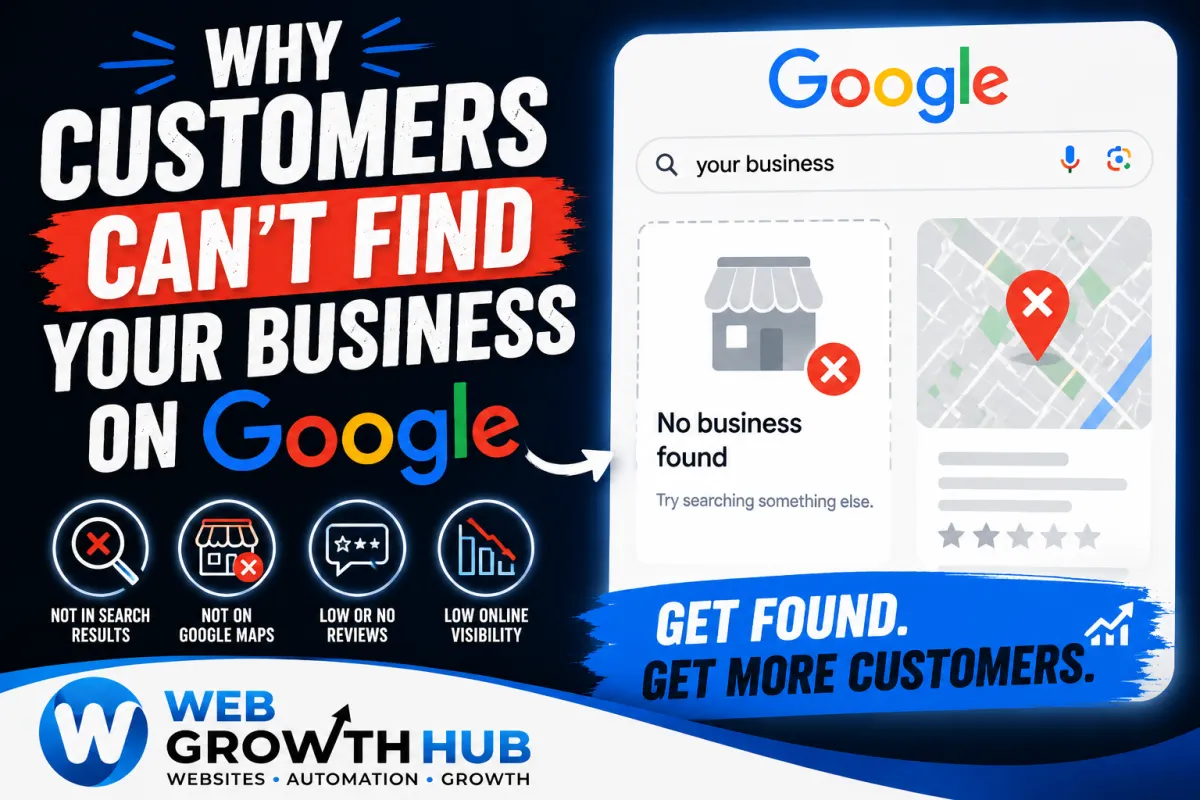
Why Customers Can’t Find Your Business on Google (And What to Do About It)
If your ideal customers are searching on Google but your business or your clients’ businesses aren’t showing up, revenue is leaking every single day. This guide breaks down the most common reasons businesses stay invisible on Google and what smart brands and agencies can do to fix it.
The Harsh Reality: Being Invisible on Google Is a Business Problem, Not Just a Marketing Problem
When customers can’t find you on Google, they don’t assume your SEO is weak. They assume your business isn’t relevant, established, or even trustworthy. For agencies, this creates uncomfortable conversations with clients who feel like they’re “doing everything right” but still aren’t seeing their brand appear where it matters: on page one of Google for the searches that drive intent and revenue.
The good news? Visibility problems are rarely random. They almost always trace back to a set of predictable, fixable issues. Understanding these issues is the difference between a website that quietly exists and one that consistently attracts ready-to-buy visitors from search.
1. You’re Targeting the Wrong Searches (or None at All)
Many businesses assume that simply having a website means they should show up when people search for what they sell. But Google doesn’t rank businesses; it ranks pages that best match specific search intent. If your site isn’t aligned with what people actually type into Google, it will be quietly ignored, no matter how good your product or service is.
Your content is built around what you call your service, not what customers search for (e.g., “bespoke digital solutions” instead of “website design agency”).
You’re trying to rank for ultra-competitive, broad terms (“marketing agency”) instead of more realistic, intent-driven phrases (“B2B marketing agency in Chicago”).
There’s no clear keyword focus for each key page; Google can’t tell which page should rank for which query.
💡 Pro Tip for Agencies: Before any design or copy work, build a keyword map that assigns primary and secondary keywords to each core page. This becomes your blueprint for content, structure, and internal links.
2. Your Google Business Profile Is Weak, Incomplete, or Missing
For any local or service-based business, the Google Business Profile (formerly Google My Business) is often more important than the website itself for visibility in local searches and map results. If you or your clients aren’t appearing in the “map pack” — those three highlighted businesses under the map — your profile is usually the culprit.
The profile hasn’t been claimed or verified, so Google has limited confidence in the business details.
Key fields (categories, services, description, opening hours) are missing or outdated, which weakens relevance for local queries.
There are very few reviews, or the review profile looks unnatural or inconsistent with competitors.
For agencies, optimizing Google Business Profiles is one of the highest ROI, lowest-effort services you can offer. A well-built profile with consistent NAP (name, address, phone), strong categories, and fresh updates can move a business from invisible to visible in weeks, not months.
3. Technical SEO Issues Are Blocking or Confusing Google
You can’t rank if Google can’t properly crawl and understand your site. Many visibility problems stem from technical issues that aren’t obvious to non-specialists but are glaring red flags to search engines. For businesses and agencies, this is where a basic technical audit pays off quickly.
No indexation strategy: Important pages accidentally blocked by
noindextags, robots.txt rules, or incorrect canonical tags.Slow load times: Bloated images, heavy scripts, and poor hosting slowing pages to a crawl, especially on mobile, leading to lower rankings and higher bounce rates.
Messy URL structure: Duplicate content, multiple URLs for the same page, and unclear hierarchy make it hard for Google to know which version to trust.
💡 Agency Angle: Offering a simple “technical health check” with clear, non-technical explanations is a powerful way to win trust and show clients why they’re not ranking — and how you’ll fix it.
4. Your Content Doesn’t Match Search Intent (Even If It Has Keywords)
Businesses often believe that sprinkling keywords into a page is enough. But modern Google is ruthless about intent. It doesn’t just look for keywords; it looks for pages that fully satisfy what the searcher is trying to accomplish. If your content misses that mark, it won’t rank, even if it looks optimized on the surface.
For example, someone searching “how much does a branding agency cost” wants clarity, ranges, and factors that influence price — not a vague sales page that dodges the budget conversation. If your page avoids the real question, Google will favor a competitor who answers it directly and in depth.
Informational queries need educational content: guides, FAQs, explainers, and comparisons — not just service descriptions.
Commercial queries need proof: case studies, pricing clarity, benefits, and social proof to support a buying decision.
Local queries need signals of proximity and trust: address, service area, reviews, and local relevance.
Pages that fully answer search intent consistently outrank thin, self-focused content.
5. Weak On-Page Optimization: Google Can’t See the Structure You See
Even strong content can underperform if the on-page signals are unclear. Google reads structure, not just words. If your headings, titles, and meta data don’t clearly describe what each page is about, you’re forcing search engines to guess — and they usually guess in favor of a competitor who makes it easier.
Missing or vague title tags: Page titles that say “Home” or “Services” instead of “Branding Agency in London | XYZ Studio”.
Unstructured headings: No H1, multiple H1s, or headings that don’t reflect the main topic and subtopics of the page.
Thin or missing meta descriptions: No compelling reason for searchers to click your result instead of another.
📌 Key Takeaway: On-page SEO is about clarity, not tricks. Make it effortless for Google to understand the topic, location, and value of each page at a glance.
6. You Don’t Have Enough Authority in Google’s Eyes
Even if your site is technically sound and your content is solid, you may still struggle to rank because Google doesn’t yet see you as an authority. Authority is built primarily through backlinks — other reputable sites linking to yours — and through signals of expertise and trust in your content and brand presence.
For many smaller businesses and newer agencies, this is the missing piece. They quietly publish content on an island, hoping Google will “discover” it. But without mentions, links, and signals that others value your content, Google has little reason to rank you above established players with a stronger digital footprint.
No strategy for earning links from partners, suppliers, industry directories, or relevant publications.
Little to no thought leadership content (original research, in-depth guides, opinion pieces) that others would naturally reference or share.
Inconsistent brand presence across the web — different names, addresses, or messaging in key places.
💡 For Agencies: Position link-building as authority-building. Show clients how strategic partnerships, PR-style outreach, and digital assets like research reports can drive both visibility and credibility.
7. Local Signals Are Inconsistent or Confusing
For bricks-and-mortar businesses and service areas, local SEO is its own ecosystem. If your address, phone number, or business name appears differently in different places, Google hesitates to show you in local results. Inconsistent local signals can quietly sabotage otherwise good SEO work.
Different versions of your business name (“Acme Marketing” vs “Acme Marketing Agency Ltd”) across directories and social profiles.
Old addresses still listed on review sites, local listings, or old partner pages after you’ve moved location or gone remote-first.
Multiple listings for the same business, which can split reviews and dilute your local authority.
A local citation audit — identifying and correcting inconsistent listings — is often enough to significantly improve map pack visibility for smaller businesses competing in a defined geographic area.
8. Poor User Experience Sends Negative Signals Back to Google
Google doesn’t just look at your site in isolation; it also observes how users interact with it. If visitors frequently bounce back to search results, struggle to navigate, or abandon slow-loading pages, those behaviors can indirectly undermine your rankings over time. For businesses and agencies focused only on keywords and content, UX can be the blind spot that keeps them stuck.
Confusing navigation that buries important content two or three clicks deep, instead of making it easy to access from the main menu.
Intrusive pop-ups, auto-play videos, or aggressive lead forms that frustrate users and drive them away quickly.
Non-responsive design or poor mobile experience, which is especially damaging now that Google uses mobile-first indexing.
📌 For Business Leaders: Think of SEO and UX as a single system. The goal isn’t just to get visitors from Google — it’s to help them quickly find what they need and feel confident taking the next step.
9. You’re Ignoring “Zero-Click” Results and Rich Features
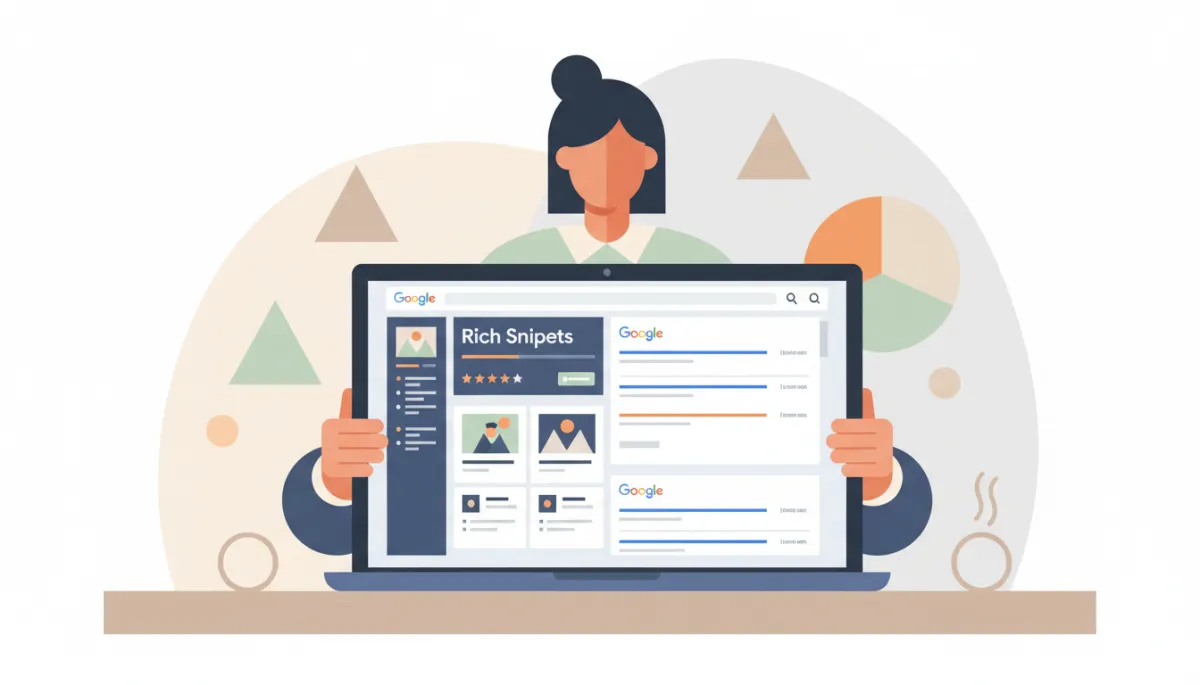
Even when you appear on page one, you may still be invisible if you’re not taking advantage of Google’s rich features: featured snippets, FAQs, knowledge panels, and “People also ask” boxes. These elements dominate screen space and attention, especially on mobile, and can dramatically increase your perceived visibility even if your organic ranking doesn’t change overnight.
Not structuring content with clear questions and answers that can be pulled into featured snippets or “People also ask” results.
No schema markup (structured data) to help Google understand your content type (e.g., FAQs, how-tos, reviews, products, events).
Ignoring branded search results — not optimizing what appears when someone searches your business or agency name specifically.
For agencies, this is a powerful way to show quick wins: optimize existing high-ranking content for featured snippets, add FAQ sections, and implement basic schema to enhance visibility without creating entirely new pages.
10. You’re Treating SEO as a One-Off Project, Not an Ongoing System
Perhaps the most common reason businesses and agencies stay invisible on Google is mindset. SEO is often treated as a checklist item: “We optimized the site last year” or “We published a few blog posts.” But search is a living ecosystem. Competitors evolve, Google updates its algorithms, and customer behavior shifts. A static SEO effort quickly decays in value.
Sustainable visibility comes from building an SEO system: a repeatable process for researching, creating, optimizing, measuring, and improving content and technical foundations over time. Businesses that commit to this rhythm steadily climb; those that “set and forget” slowly disappear from page one, even if they once ranked well.
💡 Agency Opportunity: Package SEO as an ongoing partnership — monthly or quarterly sprints with clear priorities and reporting — rather than a one-time deliverable. This aligns expectations and results.
A Practical Visibility Checklist for Businesses and Agencies
To move from invisible to discoverable, you don’t need to implement everything at once. Start with a focused audit using these core questions, and prioritize the issues that are easiest to fix and most likely to move the needle for your business or your clients.
Can we clearly list the top 10–20 keywords we want to rank for? And does each have a logical page or piece of content mapped to it?
Is our Google Business Profile fully optimized? Claimed, verified, with accurate categories, services, hours, photos, and regular updates?
Are there any obvious technical blockers? Check indexation, site speed, mobile usability, and basic crawlability using tools like Google Search Console and PageSpeed Insights.
Does our content truly answer the questions our buyers are asking? Or does it mainly talk about us, our process, and our awards?
Is our on-page optimization clear and consistent? Unique titles, headings, meta descriptions, and internal links that support a logical structure?
What’s our authority level? How many quality sites link to us, and what assets are we creating that others would want to cite or share?
Are our local signals consistent? Same name, address, phone, and branding across directories, review sites, and social profiles?
Is our user experience helping or hurting us? Fast, intuitive, mobile-friendly pages that make it easy for visitors to take the next step?
Turning Visibility Into a Competitive Advantage
When customers can’t find your business on Google, it’s tempting to blame algorithms, competitors, or “how crowded the market is.” But visibility is rarely about luck. It’s about clarity, consistency, and commitment. The brands and agencies that win in search aren’t necessarily the biggest — they’re the ones who systematically remove friction between what people are searching for and what their digital presence delivers.
For businesses, that means treating Google not as a mysterious black box but as a reflection of how well you understand and serve your market. For agencies, it means moving beyond surface-level “SEO packages” and stepping into the role of strategic partner — helping clients align their messaging, content, technology, and authority with the real behavior of their buyers.
Your Next Steps: From Invisible to Unmissable
If you recognize your own business — or your clients’ — in any of the issues above, the path forward is clear:
Audit your current visibility: search for your core services, locations, and brand name the way a customer would. Take screenshots. Note where you appear — and where you don’t.
Prioritize quick wins: fix obvious technical issues, fully optimize your Google Business Profile, and update key service pages to better match search intent.
Build an ongoing plan: commit to a simple, repeatable SEO rhythm — monthly keyword reviews, new content creation, authority-building activities, and UX improvements.
The businesses and agencies that will thrive over the next few years are those that treat Google as a core channel, not an afterthought. When customers search, they should find you — clearly, confidently, and for all the right reasons. The sooner you start addressing the gaps that keep you hidden, the sooner you turn search visibility into a reliable engine for leads, sales, and long-term growth.


