

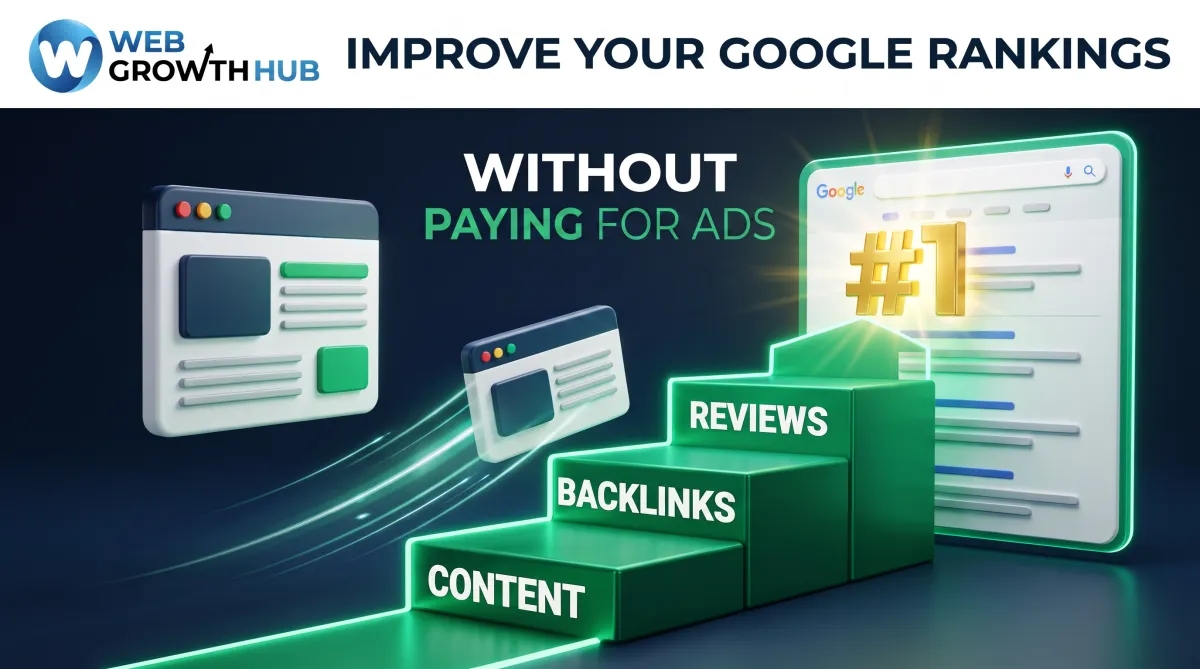
How to Improve Your Google Rankings Without Paying for Ads: A Strategic Guide to Organic Growth
How to Improve Your Google Rankings Without Paying for Ads: A Strategic Guide to Organic Growth
Imagine this: You’ve built a business you’re proud of, your customers love what you do, and your website looks professional. Yet, every time you search for your services, you see your competitors sitting comfortably at the top of the page. Meanwhile, the cost of paid search ads continues to climb, eating into your margins while providing only temporary visibility. The moment you stop paying for those clicks, your business seemingly vanishes from the digital map.
It is a frustrating cycle, but here is the truth: being "in business" and being "visible on Google" are two different things—and you don't need a massive advertising budget to bridge the gap. While paid ads offer a quick fix, true, sustainable growth comes from organic SEO. By building a technically sound website, creating genuinely useful content, and strengthening your local reputation, you can earn your way to the top of the search results without buying your way there.
In this guide from Web Growth Hub, we will demystify how to improve your Google rankings without paying for ads. We’ll break down the core pillars of organic search, provide a realistic 30-day action plan, and show you how to build a digital presence that works for you even when your advertising budget is zero.
Can You Improve Google Rankings Without Paid Ads?
The short answer is yes. In fact, organic search results still attract over 53% of all trackable website traffic, significantly outperforming paid search in the long run.
However, improving your rankings organically is not about "gaming the system." It is about becoming the most relevant, authoritative, and trustworthy answer to a user’s question. Google’s primary goal is to provide the best possible experience for its users. If your website provides that experience better than your competitors, Google will reward you with higher visibility—no credit card required.
Organic SEO vs. Paid Advertising: Understanding the Difference
To succeed, you must understand the different "neighborhoods" on a Google search results page.
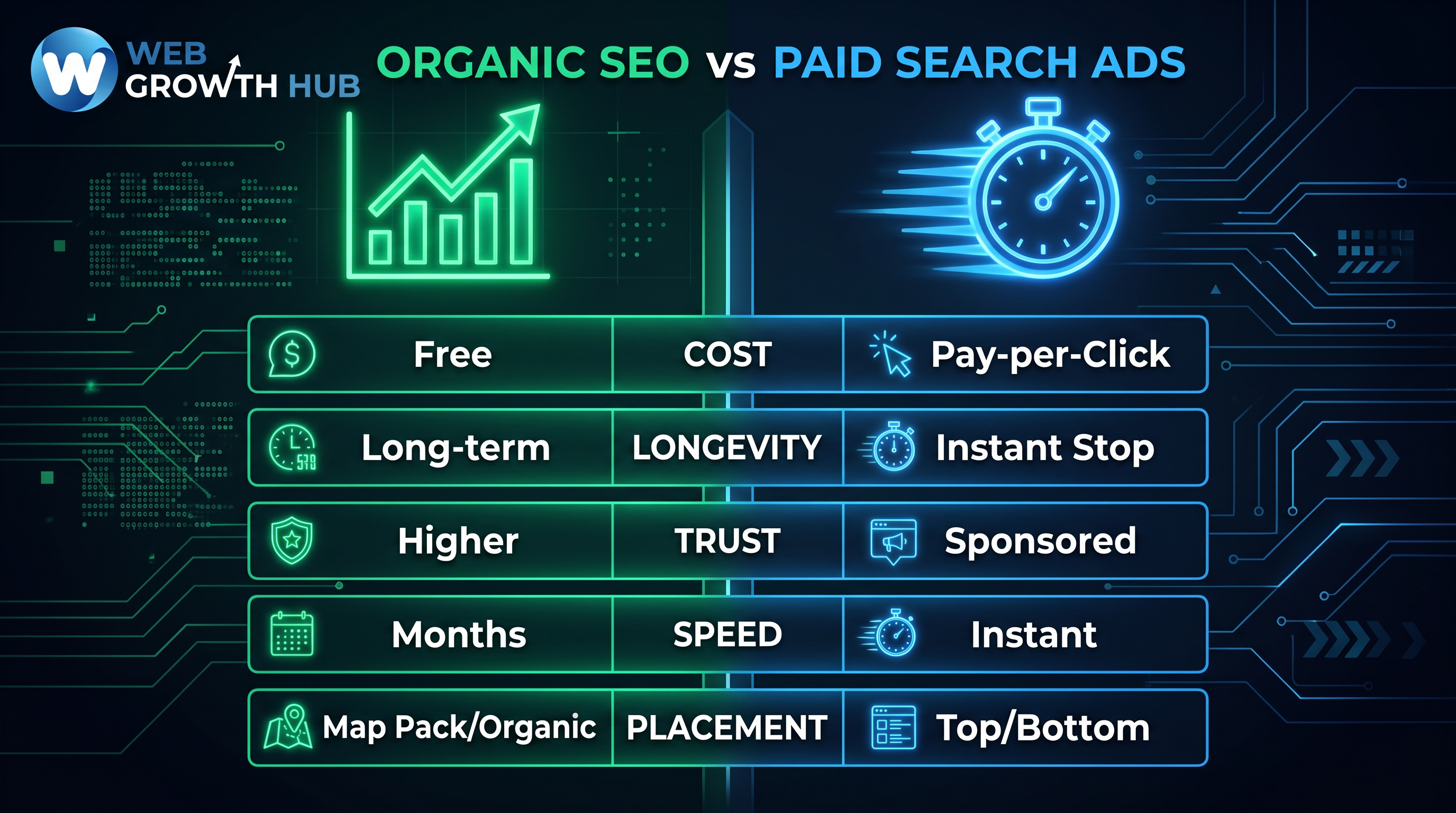
While paid ads are great for short-term promotions, organic SEO builds an asset you own. It’s the difference between renting a storefront and owning the building.
Start With the Right Keywords and Search Intent
Before you change a single word on your website, you need to know what your customers are actually searching for. This is called keyword research. In 2026, Google is less interested in matching exact words and more interested in matching search intent—the "why" behind the search.
Search intent generally falls into four categories:
•Informational: "How to fix a leaky faucet" (The user wants to learn).
•Commercial: "Best plumbers in Chicago" (The user is comparing options).
•Transactional: "Hire a plumber near me" (The user is ready to buy).
•Local: "Plumber open now" (The user needs a nearby physical location).
Targeting "plumbing" is too broad and competitive. Targeting "emergency drain cleaning in [Your City]" is specific, reflects high intent, and is much easier to rank for organically.
Improve Your Website’s On-Page SEO
Once you have your keywords, you need to place them where Google expects to find them. This is known as on-page SEO. Think of this as organizing your library so the librarian (Google) can find your books easily.
•Page Titles: Your title tag is the most important on-page signal. It should be under 60 characters and include your primary keyword near the start.
•Meta Descriptions: While not a direct ranking factor, a compelling description (under 160 characters) encourages more people to click your link, which signals to Google that your page is relevant.
•Headings (H1, H2, H3): Use a single H1 tag for your main headline. Use H2s and H3s to break up the text, making it easy for both humans and AI search systems to scan.
•URL Structure: Keep your URLs short and descriptive (e.g., yoursite.com/local-plumbing-services instead of yoursite.com/p=123).
•Image Optimization: Use descriptive file names (e.g., kitchen-sink-repair.jpg) and add alt text so Google understands what the image shows.
Create Content That Customers Actually Need
In the age of AI-generated spam, Google prioritizes content that demonstrates E-E-A-T: Experience, Expertise, Authoritativeness, and Trustworthiness.
Don't just write for the sake of writing. Create content that answers the specific questions your customers ask every day. If you’re a landscaper, write a guide on "The Best Grass Types for North Texas Heat." This proves your expertise and builds topical authority, making Google more likely to rank your entire site higher over time.
Strengthen Your Local SEO Presence
For local service providers, local SEO is often more valuable than traditional organic rankings. This focuses on appearing in the "Map Pack"—the top three local results shown with a map.
•Google Business Profile (GBP): This is your most powerful free tool. Ensure your profile is 100% complete, verified, and updated weekly with new photos or posts.
•NAP Consistency: Your Name, Address, and Phone number must be identical across the web (Yelp, Facebook, your website, etc.). Inconsistent data confuses Google and hurts your rankings.
•Local Citations: Get listed in reputable local directories and industry associations.
•Customer Reviews: A steady flow of genuine reviews is a massive ranking signal. Respond to every review to show Google you are an active, engaged business.
Improve Technical Website Performance
Google won't rank a website that provides a poor user experience. Technical SEO ensures your site is healthy and fast.
•Website Speed: A one-second delay in mobile load time can impact your conversion rate by 20%. Use tools like Google PageSpeed Insights to identify fixes.
•Mobile Usability: With Google’s mobile-first indexing, your site must look and function perfectly on a smartphone.
•Security (HTTPS): If your site isn't secure, Google will flag it as "Not Secure," driving users away and hurting your rankings.
Build Authority Through Internal Links and Ethical Backlinks
Authority is the "popularity contest" of the internet.
•Internal Links: Link your own pages together. For example, a blog post about "Spring Garden Tips" should link to your "Landscaping Services" page. This helps Google crawl your site and understand which pages are most important.
•Ethical Backlinks: A backlink is a link from another website to yours. Think of it as a "vote of confidence." Earn these by creating great content that others want to reference, or by getting featured in local news and industry blogs. Never buy backlinks, as this can lead to a permanent ban from Google.
Improve Clicks from Existing Search Impressions
Sometimes, you are already appearing in search results, but no one is clicking. You can improve your click-through rate (CTR) by refining your titles and meta descriptions to be more benefit-driven and enticing. If your impressions are high but clicks are low, your "handshake" (the search snippet) isn't working.
A 30-Day Organic SEO Action Plan
Improving your rankings is a marathon, but you can see movement by following this simple four-week plan:
Week 1: The Audit
•Check your website for broken links and mobile errors using Google Search Console.
•Ensure your Google Business Profile is verified and complete.
•List your top 5 competitors and identify the keywords they rank for.
Week 2: On-Page Polish
•Update the title tags and meta descriptions for your top 5 most important pages.
•Add internal links between your blog posts and your service pages.
•Optimize your image file names and alt text.
Week 3: Content & Local Relevance
•Write and publish one high-quality blog post that answers a common customer question.
•Post 3 new photos to your Google Business Profile.
•Verify that your business name, address, and phone number are consistent across Yelp and Facebook.
Week 4: Reputation & Tracking
•Reach out to 5 recent happy customers and ask for a genuine Google review.
•Review your search impressions in Google Search Console to see if you're appearing for new terms.
•Identify the next 5 pages that need optimization.
How to Measure Progress and Set Realistic Expectations
Organic growth takes time. While you might see some quick wins in local search within a few weeks, significant organic improvements typically take 3 to 6 months of consistent effort.
Track these metrics to ensure you're on the right path:
1.Search Impressions: Are you showing up more often?
2.Keyword Footprint: Are you ranking for more different terms?
3.Organic Traffic: Is the number of visitors from search increasing?
4.Conversion Rate: Are those visitors actually contacting you?
Common SEO Mistakes to Avoid
•Keyword Stuffing: Don't force keywords into every sentence. Write for humans first.
•Buying Reviews: Google's AI is excellent at spotting fake reviews, and the penalties are severe.
•Ignoring Technical Errors: Great content on a broken website won't rank.
•Giving Up Too Soon: SEO is a long-term investment. Consistency is the key to winning.
How Web Growth Hub Can Help
Building a sustainable SEO strategy can feel overwhelming when you're busy running a business. You don't have to do it alone.
Businesses that want a clearer path to organic visibility can benefit from an SEO strategy built around their website, content, local presence, and customer journey. Web Growth Hub helps businesses improve the systems behind search visibility, including local SEO, content strategy, website optimization, and marketing workflows. We help you organize these elements into a practical digital growth plan that builds authority and drives traffic without the constant expense of paid ads.
Conclusion: Start Earning Your Visibility
Improving your Google rankings without paying for ads is not a secret—it’s a process. By focusing on the needs of your customers and providing a high-quality, technically sound digital experience, you can build a powerful asset that generates leads for years to come.
Stop renting your visibility and start owning it. Begin with the 30-day plan above, stay consistent, and watch your business grow. Ready to build a sustainable, organic growth system for your business? Explore how Web Growth Hub can help you turn search visibility into a long-term competitive advantage.


