

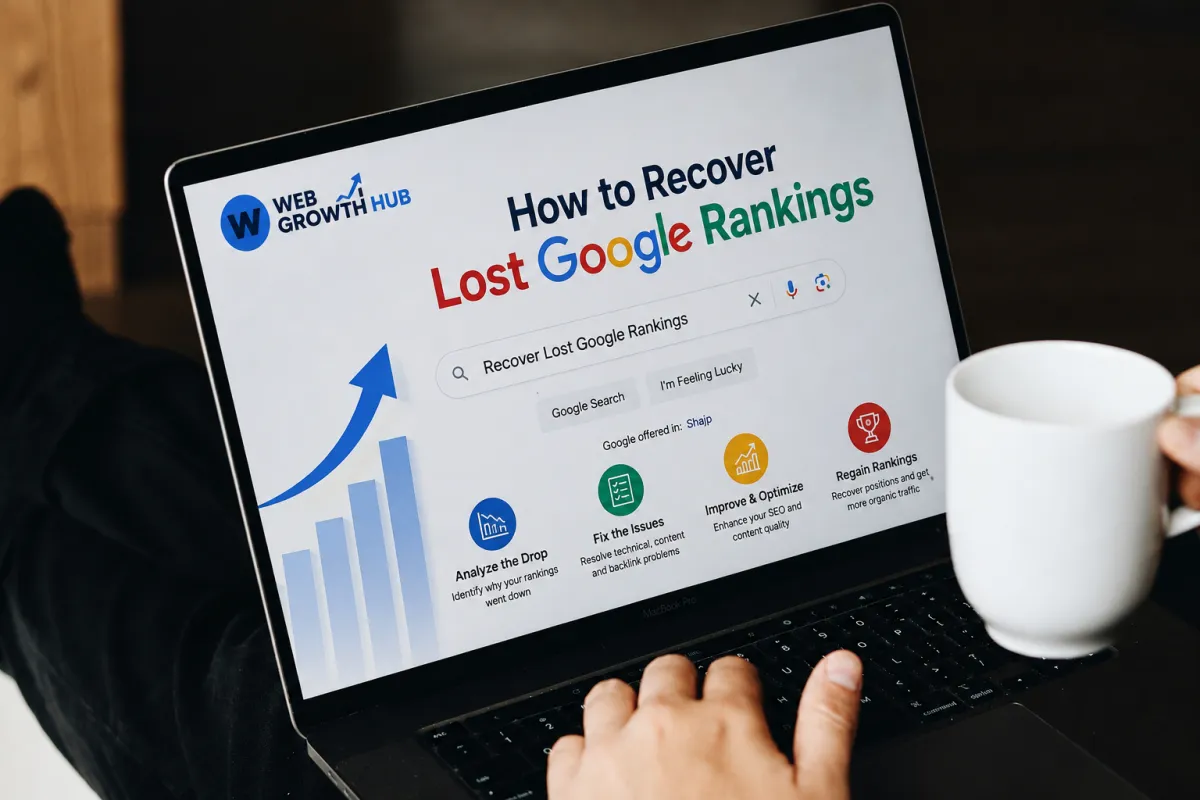
How to Recover Lost Google Rankings
Watching your website lose visibility in Google Search can be frustrating. One week you're attracting consistent visitors, generating leads, and receiving inquiries. The next, traffic begins to decline, important keywords slip down the search results, and new business slows.
It's easy to assume the damage is permanent.
Fortunately, that is rarely the case.
Most ranking drops can be recovered with the right strategy. Whether the decline was caused by increased competition, outdated content, technical SEO issues, or changes to Google's algorithm, there are practical steps you can take to improve your visibility again.
The key is to avoid chasing quick fixes.
Google rewards websites that consistently provide helpful content, strong user experiences, and trustworthy information. Recovery isn't about finding a secret trick. It's about building a stronger website than the one that lost its rankings.
In this guide, we'll walk through the most effective ways to recover lost Google rankings and create an SEO strategy that continues delivering results long after the recovery is complete.
Start by Identifying What Changed
Before making changes to your website, take time to understand why your rankings dropped in the first place.
Many businesses immediately begin rewriting pages, changing titles, or redesigning their websites without identifying the real problem.
This often makes recovery more difficult.
Instead, compare your website's current performance with previous months.
Ask questions such as:
Did rankings decline across your entire website or only a few pages?
Did traffic drop suddenly or gradually?
Did the decline happen after a Google algorithm update?
Are competitors now ranking above you?
Have important pages been removed or changed?
Has your Google Business Profile lost visibility?
Understanding the cause helps you prioritize the right improvements instead of making unnecessary changes.
If you're unsure what caused the decline, our guide on Why Did My Google Rankings Drop? explores the most common reasons businesses lose search visibility and can help you diagnose the issue before starting the recovery process.
Refresh Your Existing Content

One of the fastest ways to recover rankings is by improving the content you already have.
Many websites continue publishing new articles while leaving older pages untouched for years.
Unfortunately, outdated content gradually becomes less competitive.
Review your most important pages and ask yourself:
Is the information still accurate?
Does it answer the user's question completely?
Have competitors published more detailed content?
Could you add examples, visuals, or frequently asked questions?
Are statistics or references outdated?
Refreshing content signals to Google that your website continues to provide relevant information.
In many cases, improving an existing page delivers stronger results than creating an entirely new one.
Focus first on the pages that previously generated the most traffic, as these often offer the quickest opportunities for recovery.
Improve Search Intent, Not Just Keywords
A common SEO mistake is focusing only on keywords.
Google focuses on something much more important: search intent.
Search intent is the reason behind someone's search.
For example, someone searching:
"How to recover lost Google rankings"
isn't simply looking for pages that repeat those words.
They're looking for practical, trustworthy advice that explains what happened and what actions they should take.
When updating your content, think about whether it genuinely satisfies the visitor's needs.
Does it answer their questions clearly?
Does it explain the topic better than competing articles?
Does it guide readers toward the next logical step?
Content that solves problems naturally performs better than content written primarily for search engines.
Rather than asking, "How many keywords should I add?"
Ask:
"Would this page completely answer my customer's question?"
That mindset produces stronger content and stronger rankings over time.
Strengthen Your On-Page SEO
Once your content has been updated, review the on-page SEO elements that help search engines understand your pages.
Small improvements across multiple pages can collectively have a meaningful impact.
Pay close attention to:
Page titles.
Meta descriptions.
Heading structure.
Internal links.
Image alt text.
URL structure.
Keyword placement.
Readability.
Your pages should also include clear calls to action and logical navigation.
Remember, on-page SEO isn't just about helping Google understand your content.
It's about helping visitors quickly find the information they're looking for.
When people stay longer, explore additional pages, and engage with your website, you're creating stronger signals that your content provides value.
Fix Technical SEO Issues Before They Become Bigger Problems

Even the best content can struggle to rank if your website has technical issues that prevent Google from properly crawling or understanding it.
Think of technical SEO as the foundation of your website. If that foundation has cracks, every other SEO effort becomes less effective.
Some of the most common technical issues include:
Slow page loading speeds
Poor mobile usability
Broken internal links
Missing or duplicate title tags
Duplicate content
Incorrect redirects
Pages blocked from indexing
Broken images
Missing XML sitemaps
Crawl errors
These problems often go unnoticed because visitors may not see them immediately.
Google, however, does.
A technically healthy website makes it easier for search engines to crawl your content, understand your pages, and rank them appropriately.
Regular technical audits should become part of your long-term SEO strategy rather than something you only do after rankings decline.
Improve Your Core Web Vitals
Website speed has become an important part of user experience.
While speed alone won't guarantee higher rankings, slow websites create frustration, increase bounce rates, and reduce conversions.
Google measures several performance signals known as Core Web Vitals, which evaluate how quickly and smoothly your website loads and responds.
Improving these metrics benefits both SEO and your visitors.
Some practical improvements include:
Compressing large images
Using modern image formats
Removing unnecessary scripts
Reducing page clutter
Improving hosting performance
Enabling browser caching
Optimizing mobile layouts
A faster website not only improves your chances of ranking well but also increases the likelihood that visitors stay long enough to become customers.
Earn High-Quality Backlinks Again
Recovering lost rankings often requires rebuilding your website's authority.
One of the strongest ways to do that is by earning quality backlinks from reputable websites.
Backlinks tell Google that other websites trust your content enough to reference it.
However, not all backlinks carry the same value.
A few links from respected local organizations, industry publications, or trusted websites are usually far more valuable than hundreds of low-quality directory links.
Some effective ways to earn backlinks include:
Publishing in-depth educational content
Creating useful local resources
Sharing original research or case studies
Partnering with local businesses
Sponsoring community events
Getting featured in local news
Writing guest articles for reputable websites
Backlink building should always focus on quality and relevance rather than volume.
Strengthen Your Local SEO Signals

If your business serves a local market, recovering your Google rankings also means strengthening your local SEO presence.
Your website is only one part of Google's ranking system.
Your Google Business Profile also plays a major role in local search visibility.
Review your profile carefully and make sure it includes:
Accurate business information
Updated business hours
Current services
High-quality photos
Regular customer reviews
Responses to customer feedback
Updated business description
Correct service areas
Consistency across your website, Google Business Profile, and online business directories helps reinforce trust and improves Google's confidence in your business information.
Publish Content Consistently
Many businesses stop creating content once their rankings improve.
Eventually, competitors continue publishing while their own website remains unchanged.
Over time, Google naturally begins favoring websites that consistently provide fresh, valuable information.
Content marketing isn't about publishing dozens of articles every month.
It's about consistently answering the questions your customers are already searching for.
Helpful content demonstrates expertise, builds authority, and creates more opportunities to rank for relevant keywords.
For example, your website might include articles that answer questions such as:
Why isn't my business getting found online?
Why does my competitor rank above my business?
How to improve my Google Business Profile ranking
How to get more customers from Google Search
How do I keep track of leads?
Together, these articles build topical authority around local SEO and business growth while giving Google more reasons to recommend your website.
Monitor Your Rankings Instead of Guessing
Recovering rankings doesn't happen overnight.
That's why it's important to measure progress rather than relying on assumptions.
Track:
Organic traffic
Keyword rankings
Click-through rates
Google Business Profile performance
Phone calls
Form submissions
Website conversions
Local search visibility
Looking at these metrics together provides a much more accurate picture of your SEO performance than rankings alone.
Remember, the goal isn't simply to rank higher.
The goal is to generate more qualified leads and customers.
Build an SEO System Instead of Chasing Rankings
Many businesses treat SEO as a series of isolated tasks.
They update a page.
Then they stop.
They publish one article.
Then they disappear for six months.
They optimize their Google Business Profile once and never revisit it.
The businesses that consistently rank well take a different approach.
They build systems.
They regularly publish helpful content.
They monitor performance.
They improve their website.
They earn customer reviews.
They optimize their local presence.
And they continue refining their strategy over time.
SEO becomes part of the business rather than a one-time project.
How WebGrowthHub Helps Businesses Recover and Grow
Recovering lost rankings is only one piece of the puzzle.
Once visitors arrive on your website, you still need systems that convert that traffic into customers.
WebGrowthHub brings together the tools businesses need to manage that entire journey from one platform.
With professional websites, CRM, automation, lead management, appointment scheduling, review management, analytics, and marketing tools working together, businesses can strengthen both their search visibility and their ability to convert visitors into leads.
Instead of managing multiple disconnected tools, everything works together to support long-term growth.
Whether you're recovering lost rankings or building a stronger online presence from the ground up, having a connected system makes ongoing optimization far more manageable.
Final Thoughts
Losing Google rankings doesn't mean your website has failed.
In many cases, it's simply a sign that your competitors have improved, search behavior has changed, or your website needs attention.
The good news is that recovery is possible.
By improving your content, strengthening your technical SEO, earning quality backlinks, optimizing your local presence, and consistently publishing valuable information, you can rebuild your visibility and create a stronger foundation for future growth.
Most importantly, remember that SEO is not about chasing Google's algorithm.
It's about creating the best possible experience for your customers.
Businesses that focus on helping users, maintaining high-quality websites, and continually improving their online presence are the ones most likely to achieve lasting success in Google Search.
Frequently Asked Questions
How long does it take to recover lost Google rankings?
The recovery timeline depends on the cause of the ranking drop. Minor technical fixes may show improvements within a few weeks, while recovering from algorithm updates or rebuilding website authority can take several months. Consistent optimization usually produces the most sustainable results.
Can I recover my Google rankings without rebuilding my website?
Yes. In many cases, updating existing content, fixing technical SEO issues, improving page speed, earning quality backlinks, and strengthening your Google Business Profile can restore rankings without requiring a complete website redesign.
Should I create new content or update old content?
Start by updating your highest-performing pages and older content that has become outdated. Once your existing content is optimized, continue publishing new articles that answer your customers' questions and strengthen your website's topical authority.
Do Google Business Profile updates help recover rankings?
For local businesses, maintaining an active and accurate Google Business Profile can improve local search visibility. Regularly updating business information, adding photos, responding to reviews, and collecting new reviews all contribute to stronger local SEO signals.
What is the best long-term strategy for maintaining Google rankings?
The most effective strategy is to consistently publish helpful content, maintain a technically healthy website, optimize your local SEO, monitor performance, earn high-quality backlinks, and continuously improve the user experience. SEO is an ongoing process, not a one-time task.


