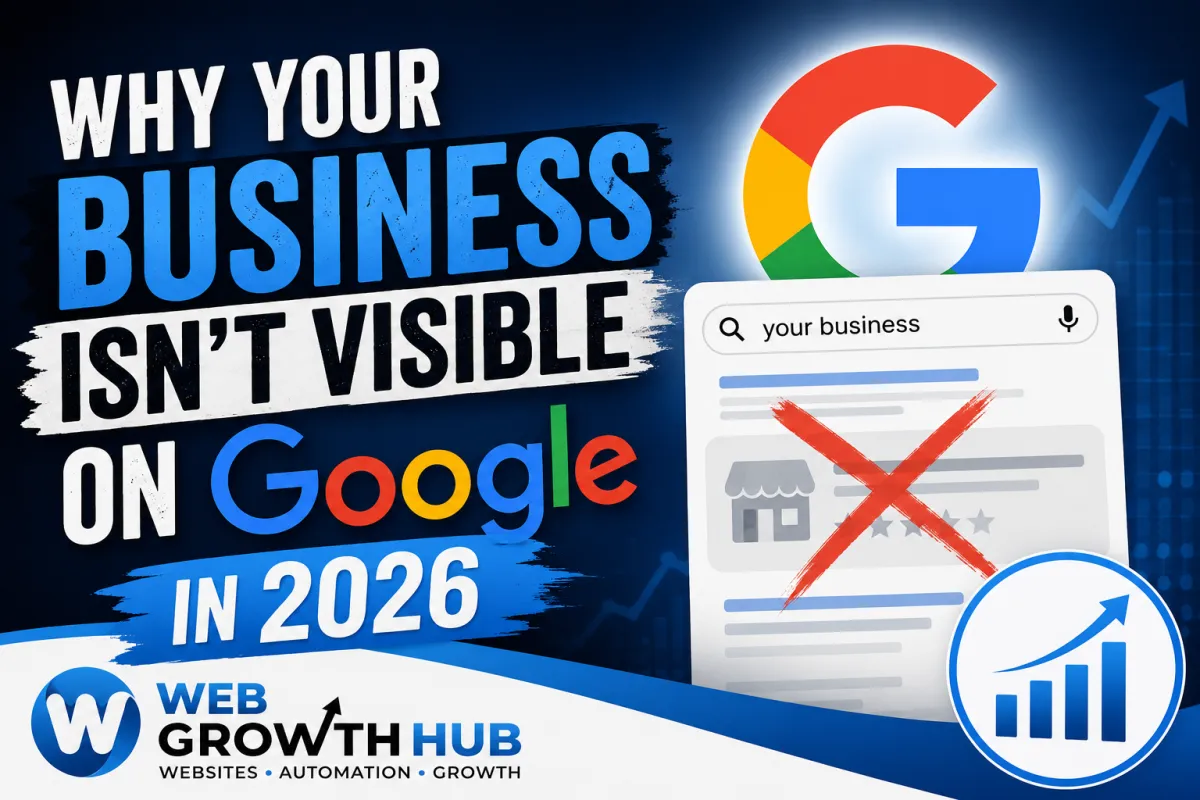
Why Your Business Isn't Visible on Google in 2026
SEO, AI Search, Small Business Marketing
Why Isn’t My Business Showing on Google (or in AI Answers) in 2026?
If you’ve ever typed your business name into Google and seen… nothing, you’re not alone. But in 2026, the real danger isn’t just being invisible on Google—it’s being invisible to AI tools like ChatGPT, Gemini, and other “answer engines” that people now trust to tell them what to buy.
Common Misconceptions About “Showing Up on Google”
Many business owners still think visibility works like a simple equation: SEO = Google ranking = backlinks = traffic. That might have been half-true in 2015, but in 2026 it’s only a small piece of the story. Here are the myths that quietly hold businesses back:
“If I rank #1, I’ll get all the clicks.” Google’s AI Overviews and “AI Mode” now sit above traditional results in a huge share of searches. Ahrefs data shows these AI sections can cut clicks to the #1 result by around 58%, even when you do rank first. Being visible no longer guarantees traffic.
“Backlinks are everything.” Backlinks still matter, but AI systems look at a wider web of signals: brand mentions, citations across trusted sites, consistent information, reviews, and topical authority. A handful of paid links can’t compete with genuine, distributed reputation.
“SEO is just keywords on my website.” Modern search is semantic and intent-driven. It’s not about repeating “best plumber in Chicago” 20 times; it’s about answering the real questions people have, in depth, across a cluster of related topics.
“If I’m not on page one, I’ve failed.” With AI Overviews, featured snippets, local packs, videos, and carousels, there are now many ways to “show up.” Plus, more of the action is shifting outside Google—to AI chats where users never see a traditional results page at all.
Quick reality check: If your website is slow, missing basic technical SEO, or lacks clear contact and business details, Google and AI systems are both less likely to trust—or recommend—you.
What Actually Stands Out in 2026: From SEO to Generative Engine Optimization
In 2026, visibility is no longer just about search engines—it’s about search engines and answer engines. Industry analysts call this shift Generative Engine Optimization (GEO): the art of becoming the brand AI chooses to mention when someone asks for recommendations.
AI Overviews & Answer Boxes. Rank Crown reports AI Overviews appear in over 40% of searches. That means Google often gives a full, AI-generated answer before users even consider clicking a website. Your goal: be one of the sources that answer pulls from—or better, one of the brands it names.
Topic clusters, not one-off posts. Tools like Ahrefs show that a single query triggers many related “hidden” searches. Instead of chasing individual keywords, winning brands build topic clusters—interlinked content that covers a subject from multiple angles, matching different micro-intents (how-to, tools, pricing, comparisons, mistakes, etc.).
EEAT: Experience, Expertise, Authoritativeness, Trustworthiness. Shopify and SEO.com both highlight that real-world experience and clear authorship still drive trust. Case studies, first-hand walkthroughs, and transparent “who we are” pages signal both to people and AI that you’re credible.
Structured data & technical hygiene. Schema markup, FAQ sections, and clean site structure help AI understand and quote your content. Search Engine Land notes that files like
llms.txtare emerging as another way to communicate with AI crawlers.
💡 Actionable SEO tip: Run your site through PageSpeed Insights and Google Search Console once a month. Fixing slow-loading pages, broken links, and indexing issues is one of the fastest ways to improve both search and AI visibility.
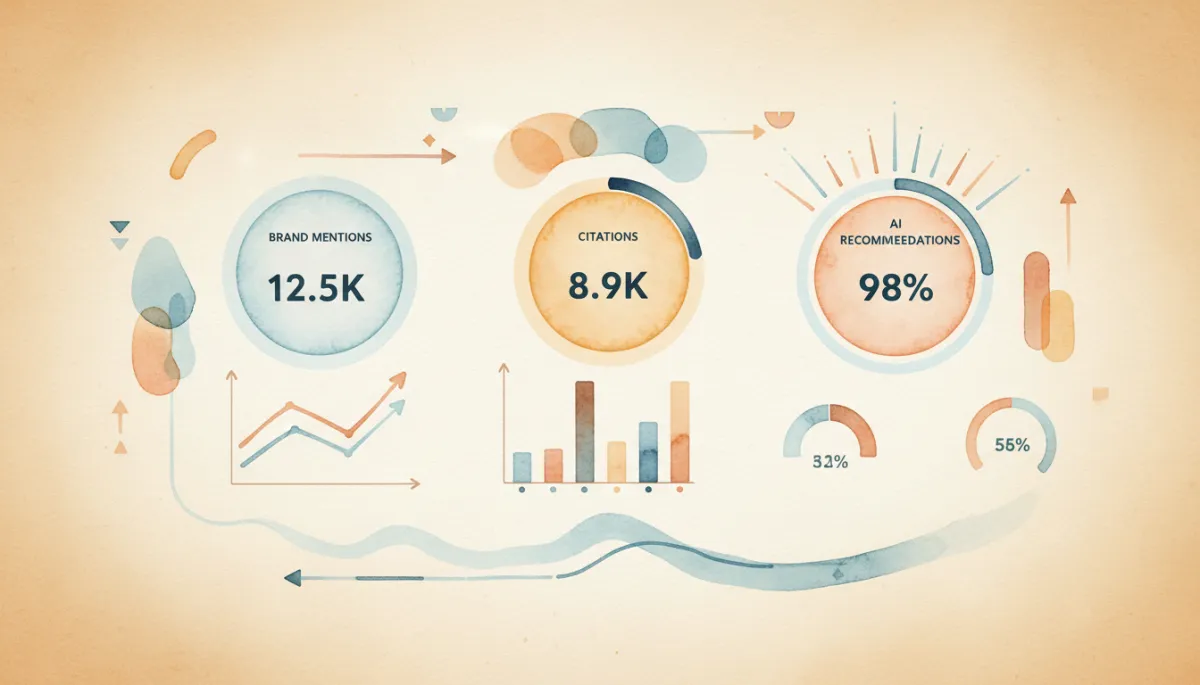
Leading marketers now track AI citations and brand mentions alongside rankings.
Why Being Mentioned by AI Matters More Than Ever
Think about how people search today. They don’t just Google “project management software” anymore. They open ChatGPT or another assistant and ask: “What’s the best project management tool for a small remote team?” Then they buy based on the answer.
Trackingplan notes that in this new landscape, AI citations and conversions matter more than traditional click-throughs. If your brand never appears in those AI-generated shortlists, you’re missing decisions that happen long before anyone reaches your site.
So how do you become “the brand AI keeps mentioning”?
Be everywhere your buyers already trust. Large language models lean on diverse, reputable sources. That means reviews, comparison articles, podcasts, YouTube channels, niche blogs, and industry directories. Backlinko and Axios both highlight that third‑party validation is now as important as classic backlinks.
Encourage real conversations about your product. When people share experiences on Reddit, LinkedIn, X, or community forums, they create the kind of organic mentions AI systems learn from. A handful of honest, detailed reviews can be more powerful than a hundred thin blog posts on your own site.
Answer the questions people actually ask AI. Create content that directly matches natural-language prompts: “best CRM for small business,” “how to start a SaaS,” “best AI app for students.” Use those phrases in headings, FAQs, and comparison pages, then back them with genuine expertise and proof.
Measure beyond rankings. In 2026, smart teams track branded searches, mentions in third‑party content, review volume and quality, and how often their brand appears in AI or “AI Overview” sections—not just where they sit on page one.
Key takeaway: The core question has changed from “How do I rank on Google?” to “How do I become the brand AI confidently recommends?”
A Simple Action Plan If You’re Not Showing Up
Fix the foundations. Claim and complete your Google Business Profile, ensure your site is secure (HTTPS), mobile-friendly, and fast, and add clear contact details and service areas. These basics still matter for both local SEO and AI trust.
Build one strong topic cluster. Choose a core problem you solve and create 5–10 interlinked pieces: guides, FAQs, comparison pages, and case studies. Aim to be the most helpful, experience-rich resource on that topic in your niche.
Earn mentions, not just links. Pitch guest content, appear on podcasts, collaborate with creators your audience already follows, and encourage customers to leave detailed reviews. Think “brand visibility ecosystem,” not just “SEO campaign.”
3 quick, actionable SEO moves you can do this week:
Update one key service page. Add a clear H1 with your main keyword (for example, “Roof Repair in Austin”), a short intro, 3–5 FAQs, and at least one customer quote or mini case study.
Ask for 3 detailed reviews. Message recent happy customers and ask them to mention the service, location, and what outcome they got. This helps both local SEO and AI systems understand what you’re known for.
Publish one “best for” style post. Write a short comparison like “Best [service/tool] for [audience] in [year]” and include yourself honestly in the list. These are exactly the queries people feed into AI tools.
In 2026, your business can’t afford to be invisible—on Google or in AI answers. Shift your focus from chasing rankings to building a brand that real people talk about and that AI systems can’t ignore. That’s how you stop asking, “Why am I not showing up?” and start asking, “How do I handle all this new demand?”
How Web Growth Hub can help you get seen
If you want a partner that understands both classic SEO and modern AI visibility, Web Growth Hub can help you build the systems, content, and reputation you need to show up on Google and inside tools like ChatGPT.
Learn More About Web Growth Hub
Frequently Asked Questions About Showing Up on Google and in AI Answers
Use this quick FAQ to spot the simplest fixes and next steps for your business.
Why doesn’t my business show up when I search my name?
The most common reasons are:
Your site is new or not indexed yet in Google.
Your Google Business Profile isn’t claimed or is incomplete.
Your business name is very similar to bigger brands that dominate the results.
💡 Actionable SEO tip: Search your brand in Google, then check site:yourdomain.com. If nothing appears, submit your sitemap in Google Search Console so your pages can be crawled and indexed.
How long does SEO take to start working in 2026?
For most small businesses, you’ll typically see early movement in 4–8 weeks after fixing technical issues and publishing focused content, with stronger, more stable results in 3–6 months. Competitive industries and cities can take longer, especially for broad keywords.
How do I know if AI tools are using my content?
Right now, there’s no single perfect dashboard, but you can:
Ask tools like ChatGPT, Gemini, and Perplexity “Which sources did you use?” for queries in your niche.
Monitor referral traffic from new domains that appear after AI tools surface your brand.
Track branded searches (people Googling your name) as a proxy for AI-driven awareness.
What’s one thing I can do today to help with both SEO and AI visibility?
Create or update a single, in‑depth page that:
Explains who you are, what you do, and where you serve.
Answers the top 5–7 questions customers ask before buying.
Includes at least one short case study or testimonial with specific results.
📌 Key takeaway: The more clearly you explain what you do—in natural language your customers use—the easier it is for both Google and AI systems to surface your business in the right moments.
How Web Growth Hub can help you get seen
If you want a partner that understands both classic SEO and modern AI visibility, Web Growth Hub can help you build the systems, content, and reputation you need to show up on Google and inside tools like ChatGPT.


