

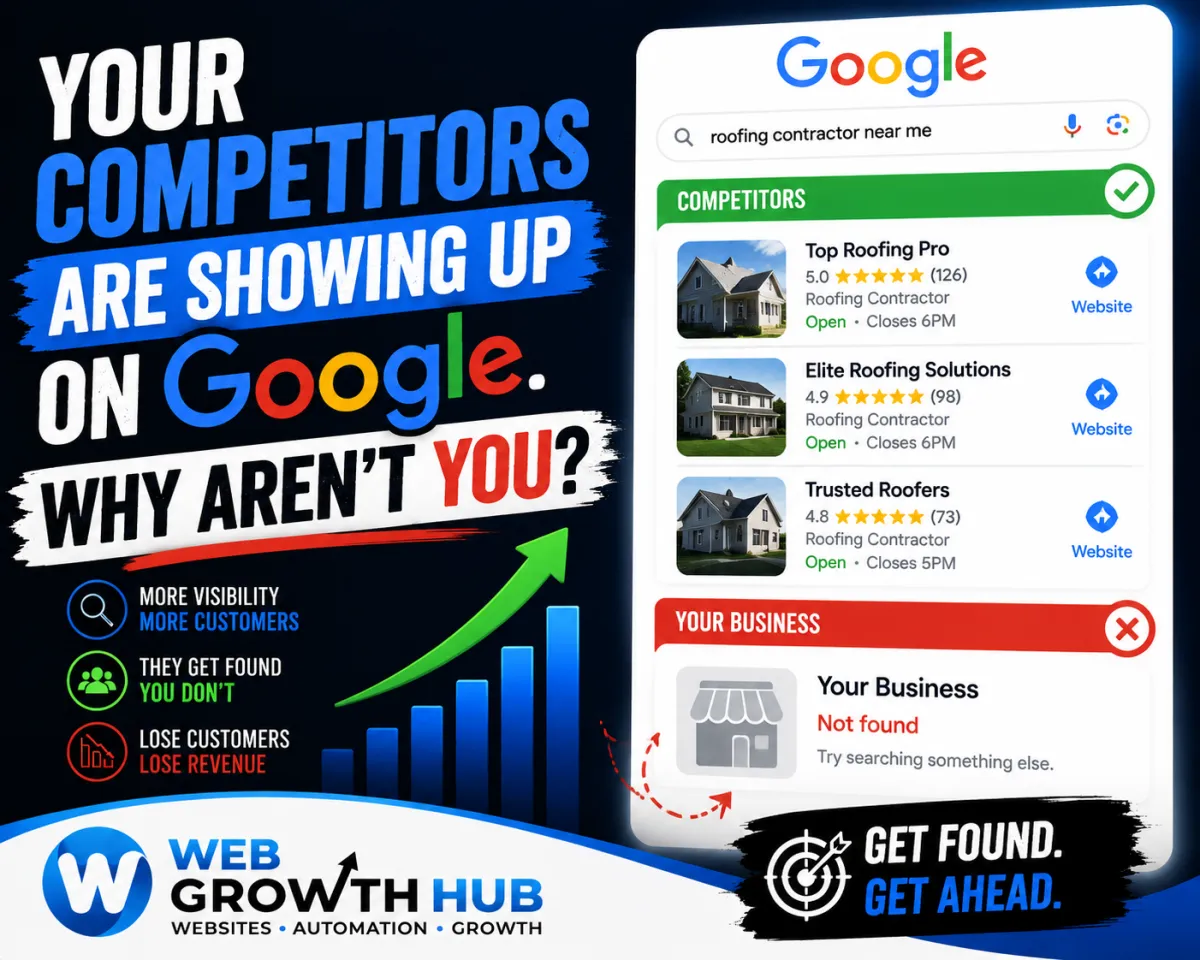
Your Competitors Are Showing Up on Google. Why Aren’t You?
SEO, Digital Marketing, Lead Generation, Agencies, B2B Growth
Your Competitors Are Showing Up on Google. Why Aren’t You?
If your competitors dominate Google search results while your business or agency barely appears, you’re not just missing “visibility” — you’re handing them leads, revenue, and authority every single day. This article breaks down why that’s happening and what you can do about it, in clear, practical terms.
If They’re on Page One and You’re Not, You’re Losing Before the Conversation Starts
When a prospect types “marketing agency near me,” “IT support for small business,” or “B2B lead generation service” into Google, they’re not randomly browsing — they’re actively looking for a partner. If your competitors show up and you don’t, the game is effectively over before you even know it started. They get the click, the conversation, and potentially the contract. You get silence.
For businesses and agencies, this isn’t a vanity metric. Search visibility is pipeline visibility. If your name isn’t appearing where your buyers are searching, they assume one of two things:
You’re too small or too new to trust, or
You don’t exist at all.
Neither perception helps you win deals, justify your pricing, or attract better-fit clients. Meanwhile, your competitors are quietly building brand recognition, authority, and a steady flow of inbound leads simply by showing up where it matters most: on the first page of Google.
📌 Key Takeaway: If you’re not visible in search, you’re not just “missing traffic” — you’re losing real opportunities to competitors who may not even be better than you, just more discoverable.
Why Your Competitors Are Showing Up on Google (Even If Their Service Isn’t Better)
Many business owners and agency leaders quietly wonder, “We’re better than they are — so why do they show up everywhere on Google and we don’t?” The answer usually isn’t quality. It’s intentional visibility. Your competitors are likely doing at least some of the following, consistently:
1. They’ve Invested in SEO, Even at a Basic Level
Search engine optimization (SEO) isn’t magic. It’s the process of making your website easy for Google to understand, trust, and recommend. Your competitors may have:
Optimized their core pages (home, services, location) for specific keywords your buyers actually search for.
Structured their content with clear headings, meta titles, and descriptions that tell Google exactly what each page is about.
Cleaned up technical issues like slow load times, broken links, or confusing navigation that discourage both users and search engines.
None of this is glamorous, but it sends a strong signal: this site is relevant and reliable for people searching for this solution. Over time, Google rewards that with better rankings.
2. They Publish Content That Matches Buyer Questions
Think about your best clients. What do they ask you during sales calls, discovery sessions, or onboarding? Your competitors are turning those questions into content:
“How much does [service] cost?”
“What’s the difference between [solution A] and [solution B]?”
“How do I know if I’m ready to hire an agency?”
Articles, guides, and case studies that answer these questions in plain language tend to rank well because they are genuinely useful. Google’s goal is to serve the most helpful result, not the flashiest brand. If your website is little more than a digital brochure, while theirs is a library of useful answers, Google will choose them every time.
3. They’ve Claimed and Optimized Their Local and Industry Listings
For many businesses and agencies, local visibility is critical. Your competitors may have:
Claimed and optimized their Google Business Profile with accurate categories, services, photos, and posts.
Collected a steady stream of reviews from happy clients, boosting both trust and local rankings.
Ensured consistent business information (name, address, phone, website) across directories and industry platforms.
These steps help Google verify that they are a legitimate, established business, which translates into better placement in map results and local search packs — the very spots prospects click first.
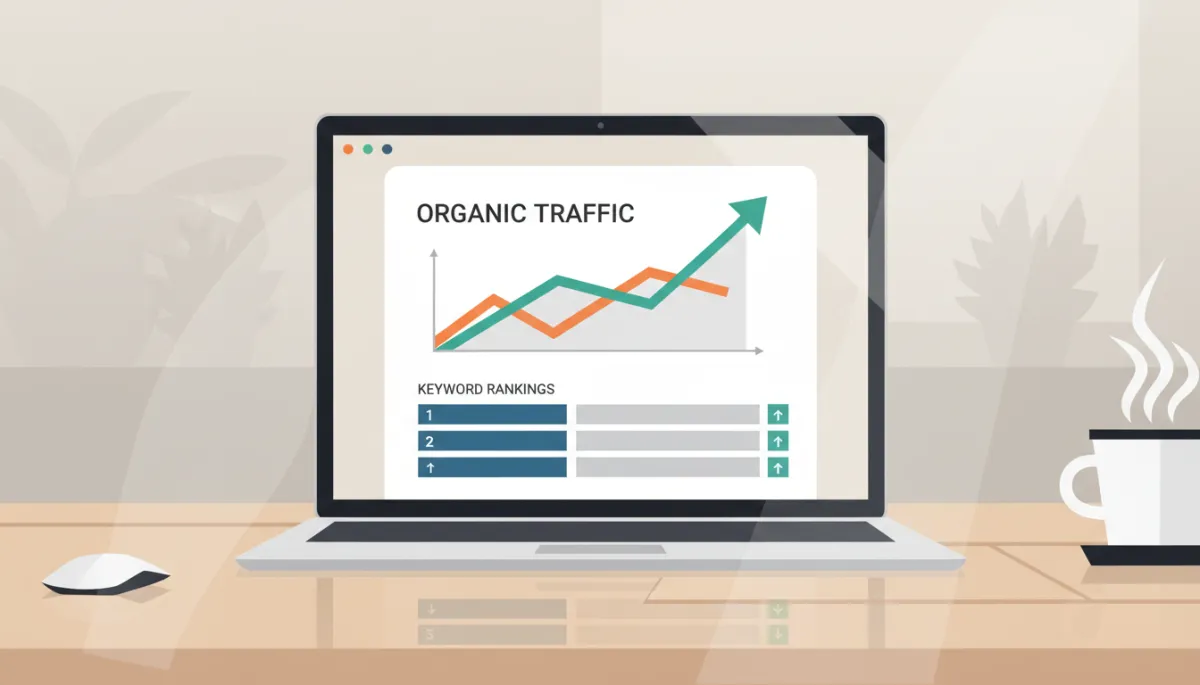
Competitors who treat SEO as a system, not a one-off task, see compounding gains over time.
Why You’re Not Showing Up on Google (Yet)
If you’re not seeing your business or agency on page one, it’s rarely because Google is “against” you. It’s usually because of one or more silent bottlenecks that are fully within your control to fix. Here are the most common reasons businesses stay invisible while competitors rise.
1. You’re Relying on Brand Searches, Not Solution Searches
Many leaders check their visibility by Googling their own business name. If you appear, they assume everything is fine. But that only shows how findable you are to people who already know you exist. The real question is:
Do you show up when people search for the problem you solve or the service you provide, without mentioning your name?
If the answer is no, you’re invisible to the majority of your potential market — especially new prospects who have never heard of you but are actively looking for what you do.
2. Your Website Was “Launched and Left”
Many businesses and agencies treat their website like a one-time project: design it, launch it, tick the box, and move on. Meanwhile, search results are dynamic. Google constantly evaluates:
Is this site being updated?
Is new, useful content being added?
Are users engaging with it, or bouncing away quickly?
A static site sends the opposite of positive signals. Over time, competitors who consistently publish and refine their content will outrank even a beautifully designed but neglected website.
3. You’re Speaking Your Language, Not Your Buyer’s Language
Agencies and B2B companies often fall into jargon: “integrated omnichannel solutions,” “holistic digital transformation,” “end-to-end enablement.” Your prospects are not typing those phrases into Google. They’re typing:
“website redesign cost for small business”
“Facebook ads agency for eCommerce”
“IT support company near me”
If your pages don’t include the plain-language keywords and phrases your buyers actually search for, Google has no reason to match you to them — but it will gladly match your competitors who do.
4. Technical Friction Is Holding You Back
You don’t need to be a developer to understand this: if your site is slow, confusing, or broken on mobile, Google will be hesitant to recommend it. Common technical issues that quietly hurt rankings include:
Pages that load slowly due to oversized images or bloated scripts.
Poor mobile experience with tiny text, overlapping elements, or hard-to-tap buttons.
No SSL certificate, which makes your site appear as “Not Secure” in browsers.
Your competitors who have cleaned up these basics are simply easier to trust — for both users and search engines — so they get the rankings and the clicks.
💡 Pro Tip: Run your site through free tools like Google’s PageSpeed Insights or Mobile-Friendly Test. If the results are poor, that’s a strong hint why visibility is lagging.
What This Means for Businesses and Agencies Specifically
For B2B companies and agencies, search visibility has a unique impact. You’re not selling impulse-buy products; you’re selling expertise, strategy, and long-term partnerships. That means your buyers are:
Researching options over days or weeks, not minutes.
Comparing multiple providers side by side.
Looking for proof, case studies, and thought leadership — not just pricing.
If your competitors are present throughout that journey — from early research (“how to improve lead quality”) to vendor comparison (“best B2B lead generation agency”) — they shape the narrative. They educate your buyers, earn trust, and subtly position themselves as the obvious choice. You become an afterthought, or never considered at all.
How to Start Closing the Gap: A Practical Roadmap
The good news: you can absolutely catch up — and even overtake — competitors who currently dominate Google. But it won’t happen by accident. Here’s a straightforward roadmap tailored to businesses and agencies that want search to become a reliable source of leads, not just a vague hope.
Step 1: Audit Where You Stand (and Where They Stand)
Before you can improve, you need a clear picture of the gap. Start with three simple checks:
Search your core services as if you were a buyer. Example: “SEO agency in [city],” “managed IT support for small businesses,” “creative branding agency.” Note who appears on page one consistently — those are your real search competitors.
Review their websites. Do they have blogs, case studies, service pages targeting specific industries or locations? How frequently are they publishing? What questions are they answering that you are not?
Check your own presence. Where do you appear (if at all) for those same searches? Are your Google Business Profile, reviews, and directories up to date?
This exercise alone often reveals the core issue: your competitors are simply playing the search game more deliberately than you are.
Step 2: Align Your Website With How Buyers Actually Search
Next, make it easy for Google to understand what you do and who you serve. For each core service or offer, you should have a dedicated, well-structured page that:
Uses clear, buyer-focused language in its headline (e.g., “B2B Lead Generation Services for SaaS Companies” instead of “Growth Enablement Solutions”).
Naturally includes the keywords your audience uses — service, industry, and location where relevant.
Clearly explains problems you solve, outcomes you deliver, and proof (testimonials, case studies, logos).
Think of each page as your “sales rep” for that specific search. When someone types “email marketing agency for eCommerce,” your page should make it obvious that you’re a perfect fit — both to the human visitor and to Google’s algorithm.
Step 3: Build a Content Engine, Not Just a Blog Section
Occasional blog posts won’t move the needle. What you need is a simple, repeatable content plan tied directly to the questions your buyers are asking. Start by listing:
The 10–20 most common questions prospects ask in sales calls.
The biggest objections they raise (price, timing, risk, complexity).
The comparisons they make (“you vs. in-house,” “this channel vs. that channel”).
Turn each of these into a clear, honest article or guide. Not fluff. Not generic “Top 10 trends” content. Real answers, with your expertise woven in. Over time, this library becomes a magnet for qualified search traffic and a resource your sales team can use to educate and nurture leads.
Step 4: Strengthen Your Local and Industry Signals
If you serve specific regions or industries, make that unmistakably clear online. For businesses and agencies, this means:
Fully optimizing your Google Business Profile with services, descriptions, FAQs, and regular posts or updates.
Encouraging satisfied clients to leave specific, detailed reviews that mention the service and, where appropriate, the location or industry.
Creating location or vertical-specific landing pages (e.g., “Digital Marketing for Law Firms in Chicago”) where it aligns with your strategy.
These steps help you compete not only on broad terms, but on the narrower, often more valuable searches where buyers are closer to making a decision.
Step 5: Treat SEO as a Revenue Channel, Not a One-Time Project
The businesses and agencies winning in search aren’t necessarily bigger or smarter. They’ve simply decided that organic visibility is a core growth channel, and they invest in it accordingly — with budget, time, and ownership. That might mean:
Partnering with an SEO-focused content agency that understands B2B and can translate your expertise into search-friendly assets.
Assigning an internal owner who coordinates content, tracks performance, and ensures the plan doesn’t stall after a few weeks.
Setting clear, realistic KPIs: rankings for strategic keywords, organic traffic growth, and most importantly, qualified leads and sales opportunities from search.
📌 Key Takeaway: SEO is not about “tricking” Google. It’s about consistently showing up with the right content, structure, and signals so Google can confidently recommend you to the right buyers.
The Cost of Staying Invisible — and the Upside of Showing Up
Every month you remain invisible in search, your competitors are quietly:
Growing their pipeline with inbound leads that could have been yours.
Reinforcing their brand as the “go-to” option in your space.
Collecting data and insights from search behavior that help them refine offers and messaging.
The opportunity cost isn’t just the deals you lose today. It’s the compounding advantage they build over time — more reviews, more case studies, more authority, and more budget to reinvest in growth. The longer you wait, the steeper the climb becomes.
On the other hand, once you commit to showing up on Google with intention, you unlock benefits that go far beyond traffic numbers:
Warmer leads: Prospects who find you through search are often already aware of their problem and actively seeking a solution.
Shorter sales cycles: Good content educates and pre-qualifies buyers before they ever talk to your team.
Pricing power: Brands that consistently appear in search are perceived as more established and trustworthy, making price less of a sticking point.
Your Competitors Are Already on Google. The Real Question Is: When Will You Decide to Join Them?
Your competitors are not on page one by accident. They made a decision — at some point — to treat search visibility as a priority, not an afterthought. They invested in the right foundations, content, and ongoing optimization. And now they’re reaping the rewards: inbound leads, stronger brand authority, and a pipeline that doesn’t depend solely on outbound or referrals.
As a business or agency leader, you have the same choice. You can continue relying on word-of-mouth, cold outreach, and paid ads alone — while watching competitors own the search real estate your buyers see every day. Or you can decide that when someone searches for the problems you solve, your name will be there, consistently and confidently.
That shift doesn’t require overnight reinvention. It requires a clear strategy, the right partners or internal ownership, and a commitment to show up where your market is already looking. The sooner you start, the sooner you stop handing opportunities to competitors who aren’t necessarily better — just more visible.
Next step: Choose one core service, one ideal client type, and one key search phrase you want to own. Then begin aligning your website, content, and local presence around it. That’s how you move from invisible to unavoidable in Google’s results.


