

Best Ways to Get Local Customers for Your Small Business in 2026
If you're like most small business owners, you've probably asked yourself the same question more than once:
"How do I get more local customers?"
It's a fair question, but it often leads businesses down the wrong path. Many assume they simply need to spend more on advertising, post more frequently on social media, or launch another marketing campaign. While those tactics can help, they rarely solve the underlying problem.
The reality is that local customers are already searching for businesses every day. They're searching on Google, asking AI assistants like ChatGPT for recommendations, checking Google Maps, reading online reviews, and comparing businesses before they ever make a phone call.
The challenge isn't that local customers don't exist. The challenge is making sure your business is visible where they're looking.
In 2026, attracting local customers is less about shouting the loudest and more about building trust, showing up consistently across multiple channels, and making it easy for people to choose your business over the competition.
In this guide, we'll explore the most effective ways to attract local customers, why many businesses struggle to generate consistent local leads, and how building the right digital foundation creates sustainable growth.
Why Getting Local Customers Has Changed
Only a few years ago, most local buying decisions followed a fairly simple path. Someone searched for a service on Google, clicked one of the first websites they found, and contacted a business.
Today's customer journey looks very different.
A homeowner looking for a roofing company might start by searching Google Maps. Another person may ask ChatGPT, "Who are the best roofers near me?" Someone else might discover your business through online reviews, a Facebook recommendation, or a YouTube video before ever visiting your website.
Customers no longer rely on a single platform when making decisions. They move between search engines, maps, AI assistants, review websites, social media, and business websites, gathering information until they feel confident enough to make contact.
This shift means visibility is no longer limited to traditional search engine optimization. Businesses need to create a strong digital presence across multiple channels while maintaining consistent information and delivering a trustworthy customer experience.
Simply having a website is no longer enough. Likewise, creating a Google Business Profile without keeping it updated won't deliver long-term results. Local customer acquisition has become a connected system where every touchpoint influences the next.
Businesses that understand this evolution position themselves where customers naturally search. Those that continue relying on outdated marketing methods often wonder why competitors seem to receive more calls despite offering similar services.
Why Many Businesses Struggle to Attract Local Customers
One of the biggest misconceptions among small business owners is believing they have a marketing problem when they actually have a visibility problem.
Many businesses provide excellent service, earn satisfied customers, and have years of experience. Yet they remain difficult to find online because the systems designed to attract local customers were never fully developed.
Consider what happens when someone searches for a local service today.
If your business doesn't appear in Google Maps, another company receives the call.
If your website loads slowly or looks outdated, visitors quickly leave.
If your reviews are limited or several years old, potential customers question whether you're still active.
If your contact information differs across directories, search engines become less confident about recommending your business.
These small issues rarely seem significant on their own. Together, however, they create enough friction to push customers toward competitors.
Another common challenge is inconsistency.
Some businesses invest heavily in advertising but neglect their website. Others focus entirely on social media while ignoring local SEO. Some collect reviews for a few months before stopping altogether. Marketing becomes a series of disconnected activities rather than a coordinated strategy.
The businesses that consistently attract local customers usually aren't doing one extraordinary thing. They're doing many small things consistently.
Their information is accurate everywhere.
Their website answers customer questions.
Their reviews build trust.
Their Google Business Profile stays active.
Their follow-up process is fast and reliable.
Over time, these elements reinforce one another, making the business easier to discover and more trustworthy when customers compare their options.
Local Customers Are Already Searching. The Question Is Where?
Many businesses focus their marketing efforts on trying to interrupt people with advertisements. While paid advertising certainly has its place, it often overlooks a much larger opportunity.
Every day, thousands of potential customers actively search for businesses because they already need a solution.
Someone searches:
"Best HVAC company near me."
Another searches:
"Emergency plumber open now."
Someone else asks an AI assistant:
"Who is the highest-rated landscaping company in my area?"
These people aren't casually browsing. They're looking for a business they can contact today.
The businesses that appear in those moments have a significant advantage because they meet customers exactly when intent is highest.
Understanding where these searches happen is the first step toward attracting more local customers consistently. It's no longer enough to think only about Google rankings. Modern local visibility includes Google Search, Google Maps, review platforms, AI-powered search experiences, local directories, and your own website working together as one connected ecosystem.

Google Business Profile Is Your Digital Storefront
If there is one tool every local business should prioritize, it is their Google Business Profile.
When someone searches for a service near them, Google often displays a map with local businesses before showing traditional website results. For many searches, this is the first thing potential customers see.
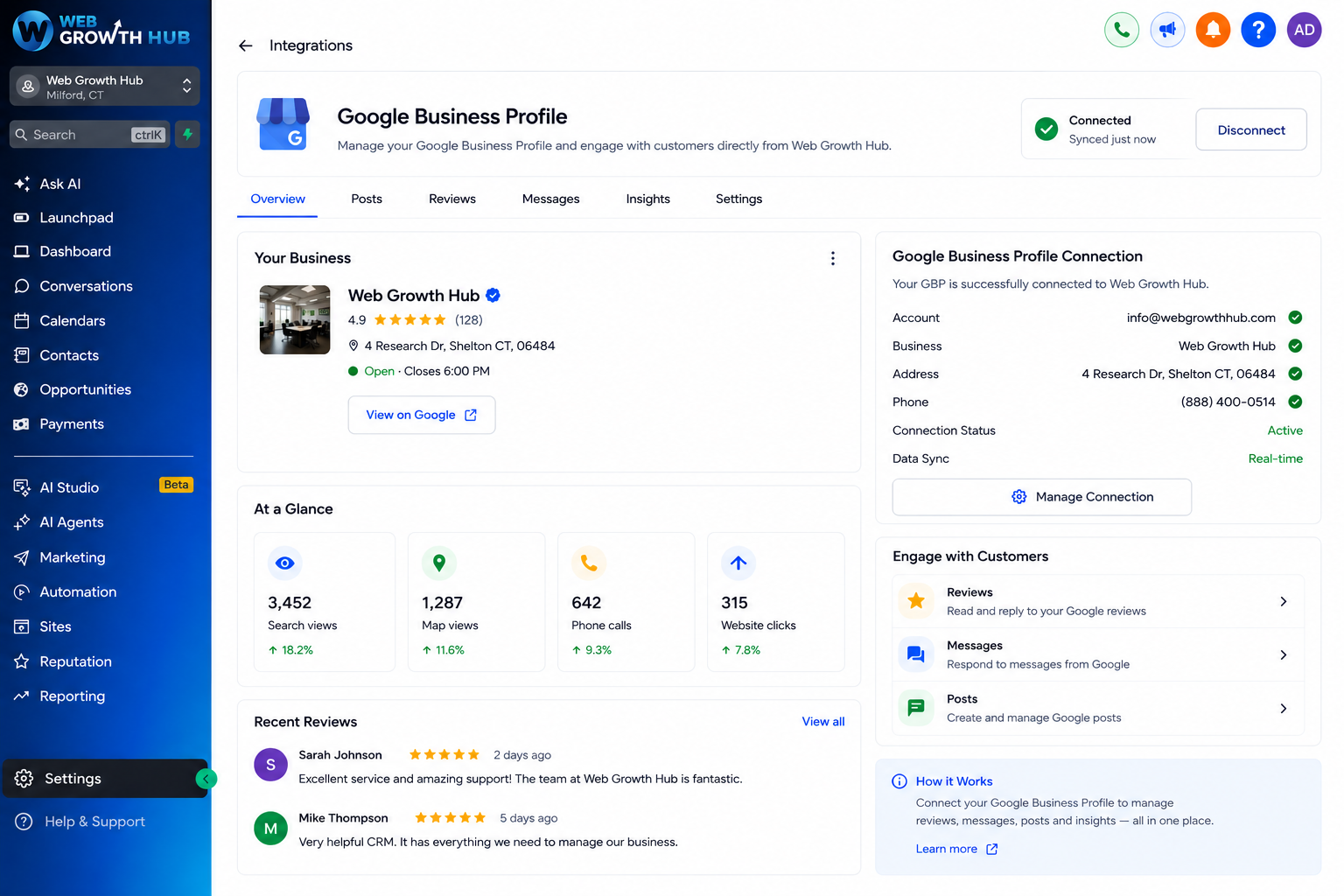
Your Google Business Profile acts as your digital storefront. It tells customers who you are, where you're located, what services you offer, when you're open, and how they can contact you. It also displays photos, customer reviews, directions, and recent updates, all within the search results.
A complete and well-maintained profile builds confidence before a customer ever visits your website. It signals that your business is active, trustworthy, and ready to serve.
Unfortunately, many businesses create their profile once and rarely update it again. Missing business hours, outdated phone numbers, old photos, or incomplete service descriptions all reduce the likelihood that customers will choose your business.
Google also looks at activity. Businesses that regularly update photos, respond to reviews, publish posts, and keep their information accurate are more likely to appear for relevant local searches.
Think of your Google Business Profile as an extension of your website rather than a separate marketing tool. Both should work together to help customers make informed decisions.
Your Website Still Plays a Critical Role
Some business owners assume that having a Google Business Profile is enough to generate customers. While it can certainly drive visibility, most people still visit a company's website before deciding to make contact.
Your website is where customers answer one simple question:
"Can I trust this business?"
Within just a few seconds, visitors form an opinion based on your site's appearance, speed, navigation, and content.
A modern website should clearly explain what your business does, who you serve, and why customers should choose you. It should make it easy to request a quote, schedule an appointment, or contact your team without forcing visitors to search for basic information.
Service pages should answer common questions rather than simply listing what you offer. Location pages should demonstrate that you genuinely serve the communities you're targeting instead of mentioning city names without useful information.
Website performance matters as well. Slow loading pages, broken links, confusing layouts, and poor mobile experiences cause visitors to leave long before they become customers.
Remember that most local searches now happen on smartphones. If your website is difficult to use on a mobile device, you're likely losing potential customers before they even have a chance to contact you.
A professional website doesn't need to be flashy. It simply needs to provide clear information, load quickly, and guide visitors toward taking the next step.
Online Reviews Have Become the New Word of Mouth
People have always trusted recommendations from friends and family. Today, online reviews have become the digital version of those recommendations.
Before contacting a local business, many customers read reviews to understand what previous clients experienced. They aren't just looking for five-star ratings. They're looking for evidence that your business consistently delivers quality service.
Detailed reviews help answer questions that marketing alone cannot.
Did the company communicate well?
Were they professional?
Did they arrive on time?
Was the customer satisfied with the final result?
These real experiences build confidence in ways that advertising simply cannot.
Review quantity also matters, but consistency is even more important. A business with hundreds of reviews from several years ago may appear less active than one that continues receiving fresh feedback every month.
Responding to reviews is equally valuable. Thanking customers for positive feedback and professionally addressing concerns demonstrates that your business values customer relationships.
Reviews also influence how search engines and AI-powered search experiences evaluate local businesses. Businesses with consistent, authentic customer feedback are generally viewed as more trustworthy than those with little or no review history.
Instead of viewing reviews as something you collect occasionally, treat them as an ongoing part of your customer experience strategy.
Consistency Builds Trust Across the Internet
Imagine a customer finds your business on Google Maps, visits your website, then checks Facebook before deciding whether to call.
Now imagine they discover three different phone numbers, two different addresses, and conflicting business hours.
Even if the differences are small, uncertainty begins to replace confidence.
Search engines notice these inconsistencies as well.
One of the most overlooked aspects of local marketing is maintaining consistent business information across every platform where your company appears. Your business name, address, phone number, website, business hours, and service areas should match everywhere customers find you.
This consistency strengthens trust with both people and search engines.
The same principle applies to your branding and messaging. Customers should recognize your business whether they discover you through Google, social media, review platforms, or your website. Consistent visuals, messaging, and contact information create a seamless experience that reinforces credibility at every touchpoint.
While keeping all of this updated may seem like a small task, it becomes increasingly important as your online presence grows. Every accurate listing helps strengthen your digital footprint, making it easier for customers to find and trust your business.
Being Visible Is Only Half the Battle
Appearing in search results is a significant first step, but visibility alone does not generate customers.
Once someone finds your business, they begin comparing it with other local companies offering similar services. They look at your reviews, visit your website, browse your photos, and decide whether you're the right fit.
The businesses that consistently win local customers understand that visibility and credibility work together. One attracts attention, while the other earns trust.
Building both takes time, but the results are cumulative. Every positive review, updated service page, optimized business profile, and helpful piece of content strengthens your online presence and makes future customers more likely to choose your business.
Helpful Content Helps Local Customers Find You
Many businesses believe their website only needs a homepage, a few service pages, and a contact form. While these pages are essential, they're rarely enough to attract consistent local traffic.
Think about how people search online.
They don't always search for a business directly. More often, they search for answers.
Someone might search:
"How much does roof repair cost?"
Another person searches:
"How often should I service my HVAC system?"
Someone else asks an AI assistant:
"What's the difference between pressure washing and soft washing?"
Every one of these searches represents an opportunity to introduce your business before a customer is ready to buy.
This is where helpful content becomes one of the most valuable marketing assets a local business can create.
Educational blog posts, frequently asked questions, buying guides, maintenance tips, comparison articles, and local service guides help answer the questions your customers are already asking. Rather than interrupting potential customers with advertising, you're providing useful information that builds trust and positions your business as a knowledgeable resource.
Search engines reward businesses that consistently publish valuable, relevant content because it helps users make informed decisions. AI-powered search tools follow the same principle by looking for content that answers questions clearly and demonstrates genuine expertise.
The goal isn't to publish hundreds of articles. It's to create content that solves real problems for the people you want to serve.
When someone finds helpful information on your website before they need your service, they're far more likely to remember your business when the time comes to make a decision.
Local SEO Is About More Than Keywords
When people hear the term "local SEO," they often think about adding city names throughout their website.
Years ago, that approach may have been enough to influence search rankings. Today, local SEO has become much more sophisticated.
Search engines want to recommend businesses that genuinely serve their communities and provide the best experience for customers.
That means evaluating far more than keywords.
Your website should clearly explain the services you provide, the areas you serve, and the problems you solve. Your Google Business Profile should be complete and regularly updated. Your reviews should reflect real customer experiences. Your website should load quickly, work well on mobile devices, and make it easy for visitors to contact you.
Search engines also pay attention to consistency across the web. When your business information is accurate and trustworthy everywhere it appears, confidence in your business increases.
AI-powered search experiences take this even further. Rather than matching exact keywords, they analyze context, reputation, expertise, and the overall usefulness of your content.
This means businesses should stop writing for algorithms and start writing for people. The clearer and more helpful your content is, the easier it becomes for both search engines and AI systems to understand what your business offers.
Local SEO isn't about tricking search engines. It's about making your business easy to understand, easy to trust, and easy to recommend.
Fast Responses Win More Local Customers Than You Think
Imagine two businesses receive the exact same inquiry at 10:00 a.m.
The first business replies within two minutes, thanks the customer for reaching out, answers a few questions, and offers available appointment times.
The second business doesn't respond until the following morning.
Even if both businesses provide excellent service, which one is more likely to earn the customer?
In many cases, the fastest response wins.
Modern customers expect businesses to acknowledge their inquiries quickly. They've become accustomed to instant confirmations, real-time notifications, and rapid communication across almost every digital service they use.
When responses are delayed, uncertainty begins to grow. Customers often continue searching, submit inquiries to other businesses, or choose whichever company responds first.
Speed communicates professionalism.
It reassures customers that your business is organized, attentive, and ready to help.
This doesn't necessarily mean every conversation must happen immediately with a real person. Sometimes a simple confirmation message, appointment acknowledgment, or estimated response time is enough to keep a customer engaged until your team follows up personally.
The businesses that consistently respond quickly create a better customer experience from the very first interaction.
The Biggest Mistakes Businesses Make When Trying to Get Local Customers
Many businesses don't struggle because they're doing everything wrong. They struggle because they're overlooking small details that collectively have a significant impact.
One common mistake is relying entirely on one marketing channel. Some businesses depend solely on social media, while others put all of their budget into paid advertising. If that one source slows down, lead generation slows down with it.
Another mistake is treating marketing as a series of one-time projects instead of an ongoing system. A website is launched and then forgotten. A Google Business Profile is created but never updated. Reviews are requested for a few weeks before the process stops completely.
Businesses also underestimate the importance of following up. Generating a lead is only the beginning of the customer journey. Without consistent communication, reminders, and timely responses, many opportunities disappear before becoming customers.
Perhaps the biggest mistake is assuming more traffic automatically means more sales.
Traffic is valuable, but only if it leads to conversations, appointments, and conversions. A business that receives fewer visitors but responds quickly, nurtures leads effectively, and provides a seamless customer experience will often outperform a competitor with significantly more website traffic.
Sustainable growth comes from improving every stage of the customer journey, not just attracting more visitors.
Turning Local Searches Into Paying Customers
Getting found online is an important achievement, but it is only the first step.
Once someone visits your website, calls your business, fills out a contact form, or sends a message, a new challenge begins.
Can your business respond quickly?
Can every inquiry be tracked?
Can follow-ups happen consistently?
Can your team see exactly where each potential customer is in the sales process?
Without a structured system, even the best marketing efforts begin to lose effectiveness. Businesses work hard to generate leads, only to lose opportunities because communication becomes inconsistent or important follow-ups are forgotten.
The businesses that consistently grow understand that attracting customers and converting customers are two parts of the same system. Strong visibility brings people in, but organized processes turn interest into revenue.
Building that complete system is what separates businesses that experience occasional growth from those that generate predictable, repeatable results month after month.
Bringing Everything Together With One Growth Platform
By now, you've probably noticed a common theme throughout this guide.
Getting more local customers isn't about finding one secret marketing tactic. It's about building a system where every part of your business works together.
Your Google Business Profile helps people discover your business.
Your website builds confidence.
Helpful content answers questions and improves your visibility in search results.
Customer reviews establish trust before someone ever contacts you.
Fast follow-ups keep prospects engaged.
A CRM organizes every interaction.
Automation ensures no opportunity is forgotten.
Each of these pieces is valuable on its own, but they become significantly more effective when they're connected.
Unfortunately, many businesses try to manage these areas using several different platforms. One system manages the website, another stores customer information, another sends email campaigns, another handles appointments, and yet another tracks performance.
As the business grows, managing all of these disconnected tools becomes increasingly time-consuming. Teams spend more time switching between platforms, updating information manually, and troubleshooting integrations than they do serving customers.
This is why many growing businesses are moving toward all-in-one business growth platforms.
Instead of treating marketing, sales, and customer communication as separate processes, they operate from one connected system where information flows automatically from one stage to the next.
That simplicity doesn't just save time. It creates a better experience for both your team and your customers.
How WebGrowthHub Helps Businesses Attract More Local Customers
At WebGrowthHub, we believe growing a local business shouldn't require managing a collection of disconnected software.
Our platform is designed to bring together the essential tools businesses need to attract, manage, and convert local customers from one centralized dashboard.
Instead of juggling multiple platforms, businesses can build a professional website, capture new leads, manage customer relationships, automate follow-ups, schedule appointments, communicate across multiple channels, and monitor performance from a single system.
This connected approach helps eliminate many of the common challenges we've discussed throughout this guide.
When a potential customer submits a form through your website, their information can be captured automatically, organized inside your CRM, assigned to the appropriate team member, and followed up with through automated workflows. Every interaction is tracked, giving your team complete visibility into the customer journey.
The result is a business that responds faster, stays organized, and creates a more consistent experience for every customer.
Rather than spending time managing software, businesses can focus on delivering excellent service and building long-term relationships with the communities they serve.
Local Growth Is Built on Consistency
There isn't a shortcut to attracting more local customers.
Businesses that consistently grow are rarely the ones chasing every new marketing trend. They're the ones that consistently execute the fundamentals.
They make it easy for customers to find them.
They provide clear and helpful information.
They earn and maintain positive reviews.
They respond quickly to new inquiries.
They stay organized throughout the sales process.
And they continually improve the customer experience.
Over time, these consistent efforts build momentum. Search engines gain confidence in recommending the business. Customers become more likely to leave positive reviews. Referrals increase. Repeat business grows.
Instead of relying on unpredictable marketing campaigns, the business develops a reliable system that continually generates new opportunities.
That is what sustainable local growth looks like.
Final Thoughts
The best way to get local customers isn't about spending the most money on advertising or trying every new marketing strategy that appears online.
Success comes from understanding how today's customers search, what builds their trust, and how to guide them from their first interaction with your business to becoming loyal customers.
That means creating a strong online presence, maintaining an accurate Google Business Profile, publishing helpful content, collecting genuine customer reviews, responding quickly to inquiries, and managing every lead through an organized system.
When these elements work together, marketing becomes far more predictable. Instead of constantly searching for your next customer, you create a business that customers can consistently find, trust, and choose.
Whether you're just beginning to improve your online presence or looking to scale an established business, investing in the right systems today will continue generating results long into the future.
Local customers are already looking for businesses like yours.
The opportunity is making sure they find you first.
Frequently Asked Questions
What is the best way to get local customers?
The most effective approach combines several strategies, including optimizing your Google Business Profile, improving your website, publishing helpful content, collecting customer reviews, implementing local SEO, and responding quickly to new inquiries. These efforts work together to increase your visibility and build trust with potential customers.
How can I attract more local customers without spending more on ads?
Many businesses can generate more customers by improving their online presence instead of increasing their advertising budget. Optimizing your Google Business Profile, earning consistent reviews, creating location-specific content, and improving follow-up processes often produce long-term results without relying solely on paid advertising.
Why is local SEO important for small businesses?
Local SEO helps your business appear when nearby customers search for the products or services you offer. Higher visibility in local search results increases website visits, phone calls, direction requests, and qualified leads from people who are already looking for a solution.
Do I still need a website if I have a Google Business Profile?
Yes. While a Google Business Profile helps customers discover your business, your website provides detailed information about your services, builds credibility, and encourages visitors to take action. Together, they create a stronger customer experience than either one alone.
How does automation help local businesses get more customers?
Automation helps businesses respond quickly to new inquiries, send follow-up messages, schedule reminders, and organize customer information without relying on manual processes. This improves consistency, reduces missed opportunities, and allows teams to focus on serving customers rather than repetitive administrative tasks.


